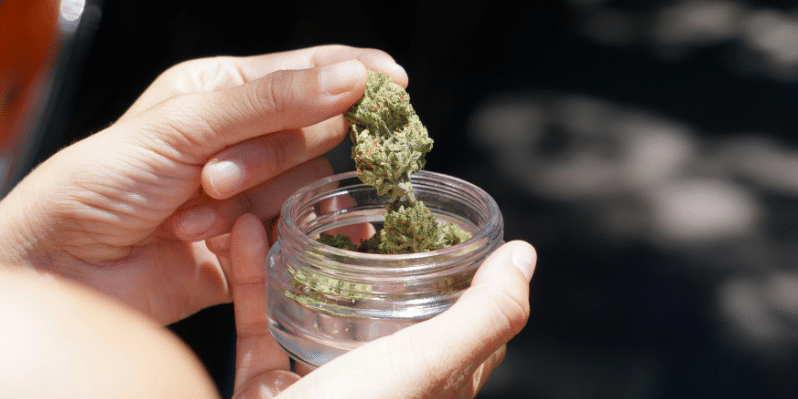
You are standing at a dispensary comparing two products. One says 21% THC and the other says 31%. For a lot of people, the bigger number immediately looks like the better choice, but THC percentage only tells you one part of the story. It can tell you about potency, but it cannot tell you everything about the quality of the product, how fresh it is, what else is in it, or whether you are actually going to enjoy it.
What Does THC Percentage Actually Tell You?
At its simplest, THC percentage gives you an idea of how much THC is in a product. A higher percentage means there is more THC by weight, but that does not automatically mean the product is better or that you will enjoy it more.
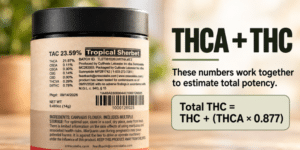
You may also notice THCA listed on cannabis labels. THCA is the form that much of the THC starts as before cannabis is heated, which is why Massachusetts uses both THC and THCA when calculating the total potency listed for products intended to be smoked. The important thing to remember is that the final percentage is a measure of potency, not a quality score.
A product testing at 30% THC is not automatically better than one testing at 20%. Research involving regular cannabis users has also shown that differences in potency do not always translate neatly into stronger reported experiences.
How Did One Number Become So Important?
Once people start using THC percentage as the main way to compare cannabis, the market responds. The Massachusetts Cannabis Control Commission has acknowledged that higher THC products, particularly flower, generally sell for higher prices. That gives everyone involved in producing and selling cannabis a reason to pay attention to that number.
Over time, THC percentage can start acting less like one measurement and more like a scoreboard. Massachusetts regulators have even referenced concerns about potency inflation when updating the way cannabinoids are reported by testing laboratories.
What Massachusetts Found When It Retested
In 2026, the Massachusetts Cannabis Control Commission purchased 63 cannabis products from 62 producers and independently checked their potency. The audit focused on flower, and while most products remained inside the state’s accepted accuracy range, 13 did not. Only seven of the 63 tested within two percentage points of the potency printed on the package.
The accepted range may also be wider than you expect. A product can still be considered substantially compliant when its tested potency falls between 75% and 125% of the number on the label. That does not mean every cannabis label is wrong, but it does show how much complexity can sit behind one number.

Indica, Sativa, and Strain Names Do Not Tell the Whole Story
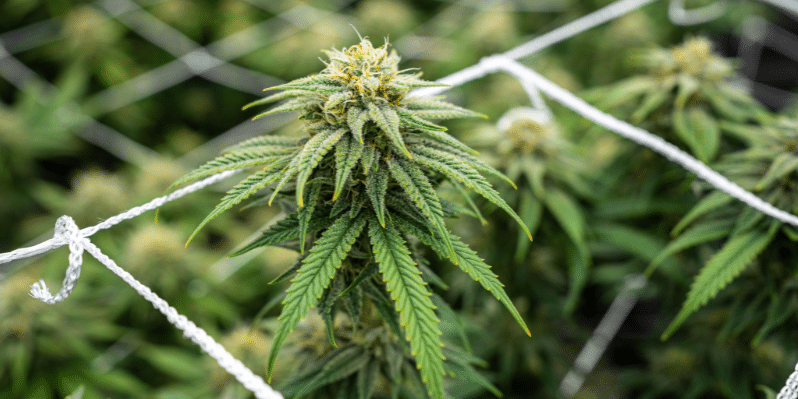
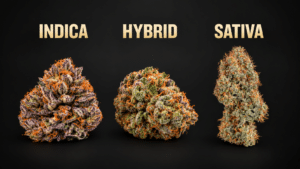
Maybe you already look beyond THC and choose based on Indica, Sativa, or Hybrid instead. Those labels can still give you a general starting point, but they do not guarantee how a particular product will make you feel. Research published in Nature Plants analyzed 297 cannabis samples and found that products labeled Sativa and Indica were not clearly separated genetically across the entire genome.
Strain names can vary too. You might love one cultivator’s version of a strain and then have a completely different experience with the same strain from another grower. Genetics, growing conditions, harvest timing, drying, curing, and processing can all influence the final product. For a deeper breakdown, check out our Indica vs. Sativa guide.
What Should You Actually Look For?
You do not need to ignore THC percentage. Instead, look at it as one piece of the bigger picture. Pay attention to the broader cannabinoid profile, terpenes, the brand or cultivator, freshness, packaging information, and what you have personally enjoyed before.
Your own experience can be especially useful. If you repeatedly like products from a certain cultivator, strain, profile, or product line, remember that. Over time, those patterns can tell you more about what works for you than automatically choosing whichever product has the biggest THC number.
The label still has value, but it should help inform your decision, not make the entire decision for you. If you are shopping in Worcester or Webster, our team can help you compare current products and better understand what you are seeing on the label.